
In today’s high-end hotel industry, intelligent upgrading has become an unstoppable trend. While smart control upgrades for guest rooms are already common, intelligent lighting upgrades for public areas such as lobbies and restaurants are gradually emerging as a new focus.
You might wonder: why do hotels go to great lengths to implement intelligent lighting in their lobbies? Today, we’ll take Pujie Technology’s upgrade project for the Hampton by Hilton Shanghai Gubei as an example to explore the “magic” of light.
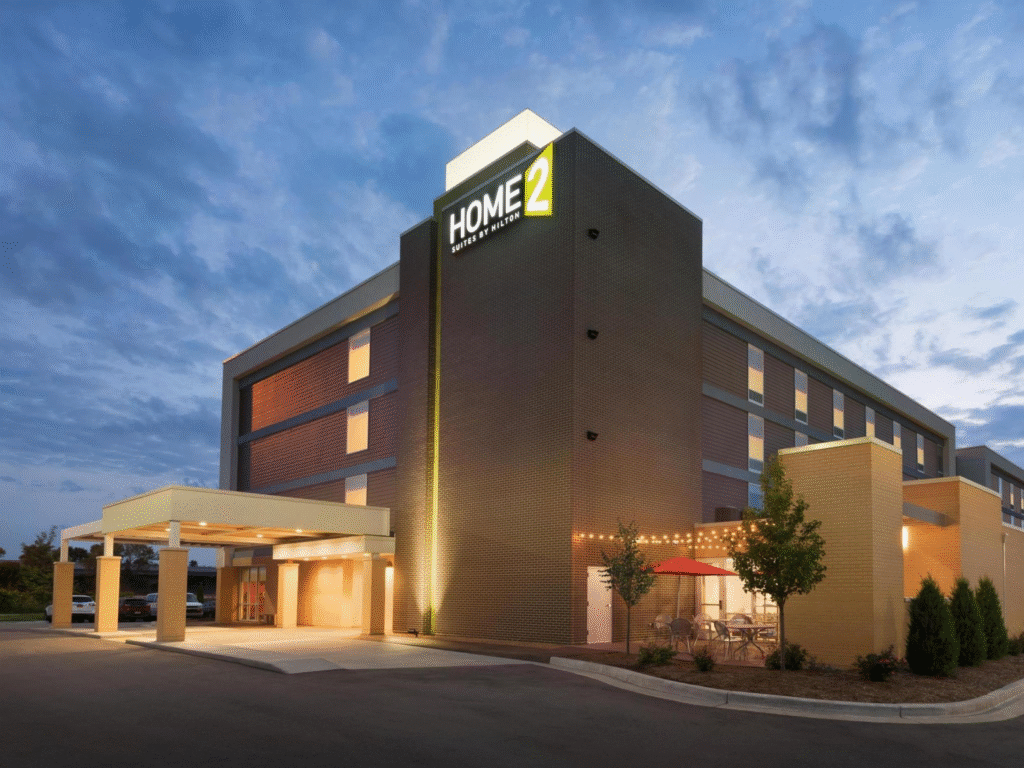
01. Hotel Lobby · Time-Based Settings
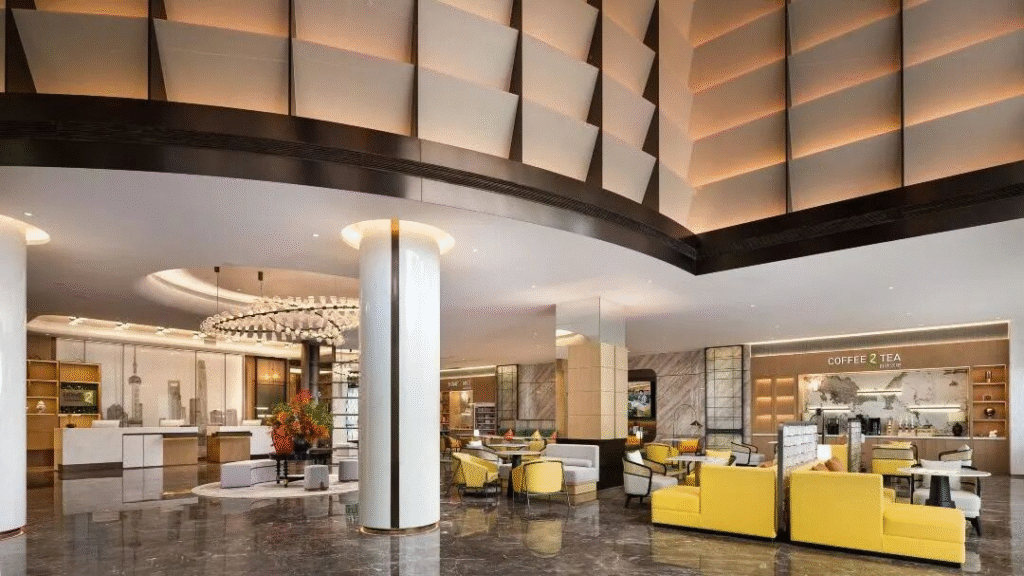
The lobby is the “face” of a hotel and a key space for making the first impression on guests. Pujie has designed detailed time-based lighting settings for this hotel’s lobby, allowing the lights to adapt to different states throughout the day and meet the needs of various scenarios.
Day Mode (10:00 – 17:00),During this period, natural light is abundant. The lighting settings are optimized as follows:
- Front desk reception area lights: set to 80% brightness to ensure staff can work clearly.
- Front desk display cabinet light strips: 20% brightness, providing auxiliary lighting to enhance the ambiance.
- Retail area spotlights: 100% brightness to highlight product features and attract attention.
- Lobby sofa area spotlights: 30% brightness, creating a relaxed and comfortable lounge atmosphere.
- Coffee bar area: 20% brightness, offering soft lighting for guests who may sit here briefly.
- Waiting area lights: 60% brightness, ensuring comfort for waiting guests.
7.Art installation area chandeliers: 80% brightness to highlight the charm of the artworks.
8.General lobby spotlights: 40% brightness, providing basic lighting for the entire lobby.
Ambiance Mode (17:00 – 23:30),As night falls, creating the right ambiance becomes particularly important:
- Front desk reception area: Themed spotlights at 50% brightness and main lights at 100% brightness, making the front desk area both eye-catching and layered.
- Retail display cabinet lights: 80% brightness, maintaining effective product display.
- Sofa area + Coffee bar lights: 80% brightness, building a warm social space.
Column area lights: 20% brightness, creating contrast with other areas.
- Art installation area: Chandeliers at 80% brightness and spotlights at 100% brightness, intensifying the artistic atmosphere.
- General lobby lights: 80% brightness, creating a warm and stylish nighttime lobby ambiance.
Energy-Saving Mode (24:00 – 5:30)In the early morning, there are few guests, so lighting focuses on energy efficiency:
- Lights in the coffee bar, column area, and art installation area: turned off to reduce unnecessary energy consumption.
- Sofa area lights: 10% brightness, retaining only faint light for anyone who may stay briefly.
- Lights in other areas: 20% brightness, meeting basic lighting needs while maximizing energy savings.
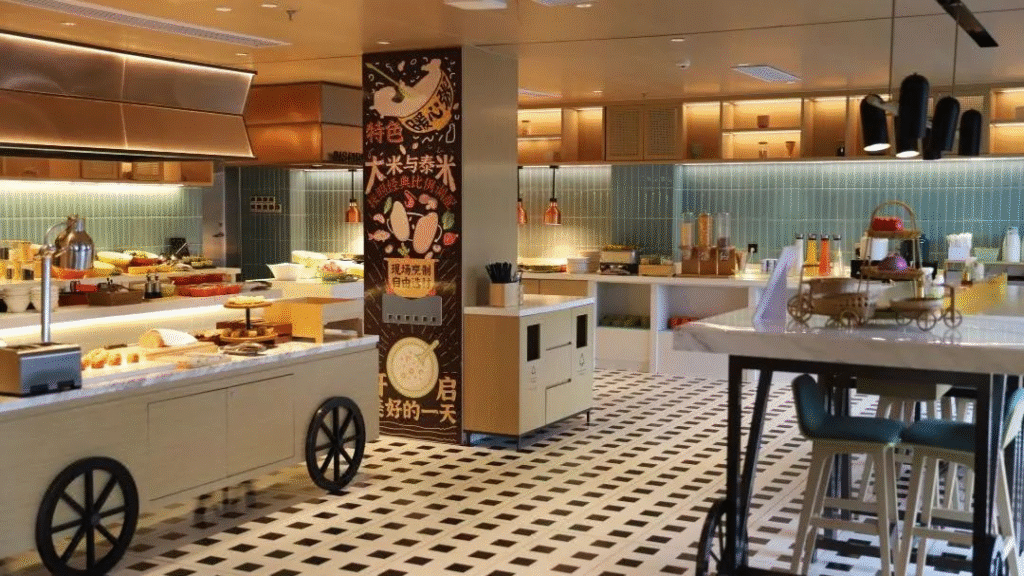
02. Hotel Restaurant · Versatile Modes
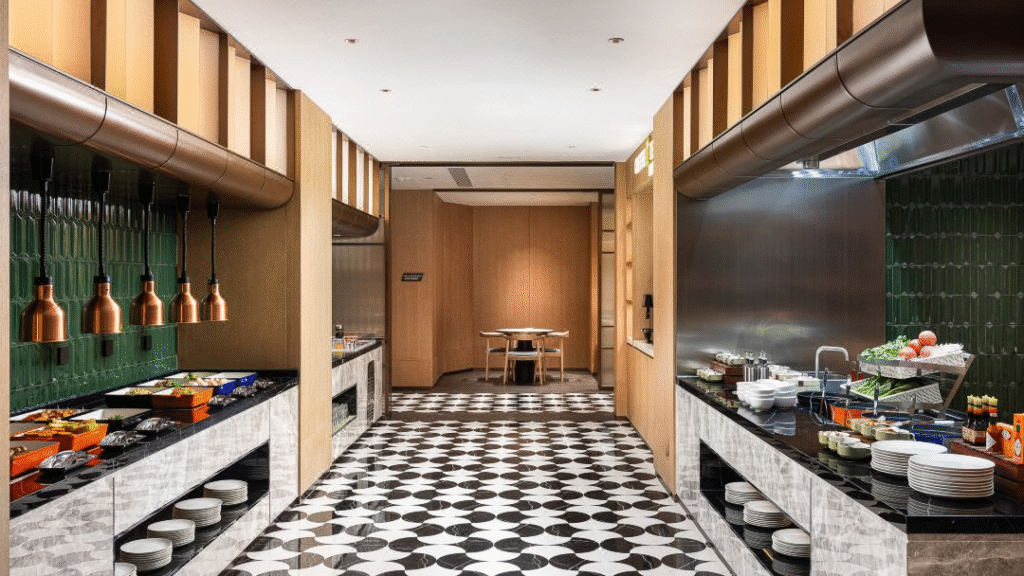
The restaurant is also a key area in a hotel, serving as an important window to showcase the hotel’s culture and service quality. Pujie has designed two core modes for it—Dining Mode and Preparation Mode—with additional full-on and full-off functions.
Dining Mode
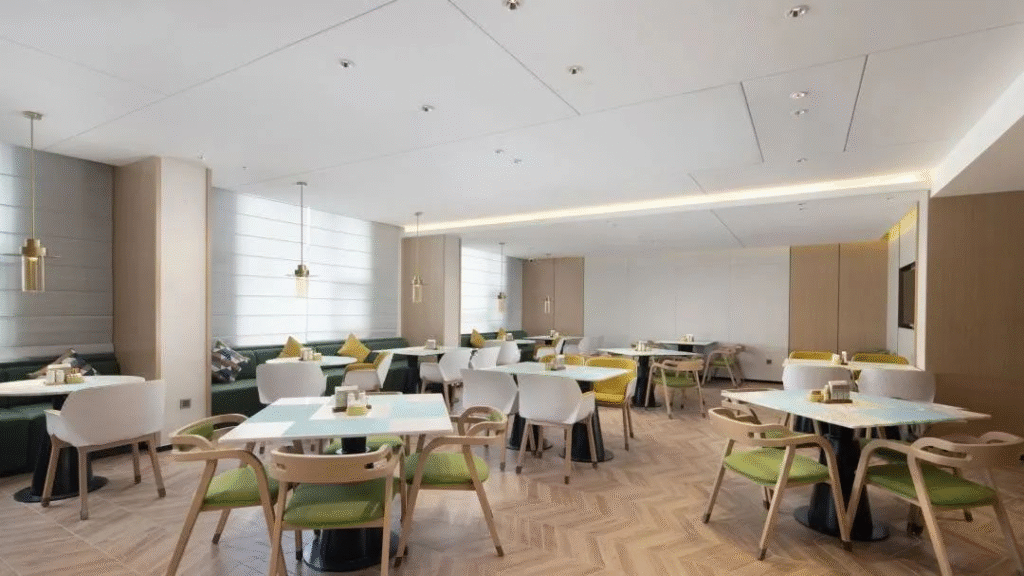
In this mode:Table area lights: set to 70%-80% brightness, ensuring clear visibility for guests during meals.
Ambient lights around the dining area: controlled at 30%-40% brightness. This avoids interfering with dining visibility while enhancing the overall elegance of the space.
Preparation Mode
To ensure staff can perform meal preparation clearly and efficiently:Meal preparation area lights: adjusted to 90%-100% brightness, improving preparation efficiency and accuracy.Dining area lights: dimmed appropriately to 30% to avoid energy waste.
03. Smart Control Devices · Stable Operation

Intelligent Lighting Distribution Box
For intelligent lighting in public areas of high-end hotels, the CAN bus solution is generally adopted. Gateway modules and dimming modules work together to achieve precise scene control.